Prof. Valentina Sharkova
Hallstatt’s Cycle and Its Impact on Human Civilization
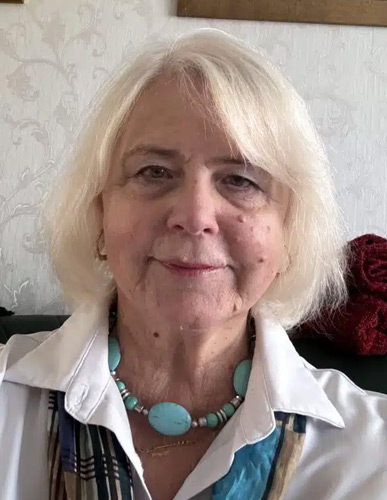
Prof. Valentina Sharkova
Professor of Mathematics and Astrophysics, Northumbria University; Solar–Terrestrial Research Specialist; Founder, ZVS Research Enterprise Ltd.
Prof. Valentina Zharkova is a leading astrophysicist internationally recognized for her groundbreaking research on solar activity, sunquakes, and solar–terrestrial interactions. She graduated with distinction in Applied Mathematics and Astronomy from Kiev National University and earned her Ph.D. in Astrophysics at the Main Astronomical Observatory in Kiev. Her academic career includes positions at Kiev National University, the University of Glasgow, the University of Bradford—where she became Professor of Applied Mathematics—and Northumbria University, where she has served as Professor of Mathematics since 2013. She is also the founder of ZVS Research Enterprise Ltd., dedicated to advancing solar–terrestrial studies.
Prof. Zharkova co-discovered sunquakes induced by solar flares (Nature, 1998), a landmark achievement with global recognition. She has made major contributions to understanding particle acceleration in solar flares, long-term solar cycles, and the prediction of the current Grand Solar Minimum (2020–2053). Her research on millennial-scale solar irradiance oscillations (Hallstatt cycle) reveals deep links between solar motion and climate variability.
Why Solar Cycles Matter
Human history has often been studied as a social and terrestrial phenomenon, shaped primarily by politics, economics, and environment. Yet the Sun—the primary energy driver of Earth’s climate system—operates on long, measurable cycles that extend far beyond the familiar 11-year sunspot rhythm.
Valentina Zharkova works at this intersection of astrophysics and Earth systems science, investigating how long-term solar oscillations influence solar irradiance, climate variability, and the conditions under which civilizations rise, adapt, or decline.
In this framework, solar activity is not background noise—it is a fundamental driver in long-range planetary dynamics.
This talk explores:
- Long-term solar magnetic field oscillations
- The Hallstatt cycle (~2,000–2,400 years) in solar irradiance
- Evidence linking solar minima and maxima to climate shifts
- How prolonged solar changes may coincide with periods of societal stress or transformation
Rather than speculation, this work is grounded in mathematical modeling, observational data, and peer-reviewed research.
More From Prof. Valentina Zharkova — Research, Publications, and Solar Physics
Valentina Zharkova extends her work beyond conference presentations through peer-reviewed research, scientific publications, and advanced modeling of solar magnetic activity and solar–terrestrial interactions.
Her research has contributed significantly to the understanding of:
- Solar magnetic field generation and evolution
- Long-term solar oscillations and irradiance variability
- Solar flares, particle acceleration, and sunquakes
- The role of solar cycles in Earth’s climate system
Prof. Zharkova’s work is widely cited within the fields of astrophysics and solar-terrestrial physics, and her mathematical models of solar activity have informed ongoing discussions about extended solar minima and long-range solar forecasting.