14TH CONFERENCE ON PRECESSION AND ANCIENT KNOWLEDGE
HYATT REGENCY, NEWPORT BEACH, CA • SEPT 25-27-2026
The Physics of Consciousness: Bridging the Yugas with Quantum Mind
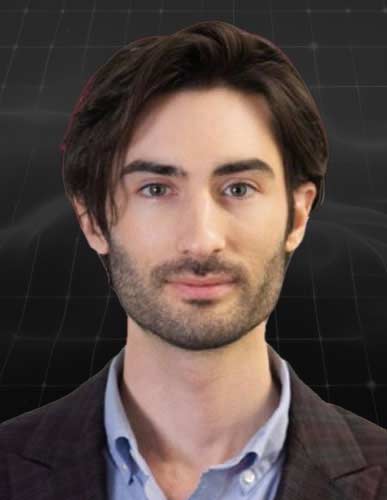
Director, Entangled Foundation | Inventor, Consciousness Researcher, Technologist
Adam Curry is a consciousness researcher and inventor whose work explores the measurable interface between mind, matter, and the quantum field. A former Director at the Princeton Engineering Anomalies Research (PEAR) Lab, Curry’s background combines cutting-edge data analysis with open-minded inquiry into the nature of reality.
As founder of the Entangled Foundation, he leads pioneering experiments in collective consciousness, random-event correlations, and non-local information fields—continuing decades of research into how human intention can influence physical systems. His work investigates whether consciousness itself may act as a resonant field shaping the evolution of civilization through great cycles of time.
By uniting ancient metaphysical principles with quantum information science, Curry’s research points toward a new synthesis: that consciousness is not a by-product of matter, but the substrate of the universe, a view echoing the higher states of awareness described in the ascending Yugas.
Adam Curry’s presentation at CPAK examines whether ancient metaphysical models – such as cyclical ages and ascending epochs – can be meaningfully connected to contemporary understandings of quantum information and collective systems.
This talk explores:
At CPAK, this perspective serves as a bridge—linking speculative ancient models with contemporary scientific inquiry.
Within CPAK’s exploration of precession, Yugas, and lost knowledge systems, Adam Curry contributes a rigorously analytical perspective—one grounded in data, experimentation, and systems thinking.
Presenting at CPAK 2023
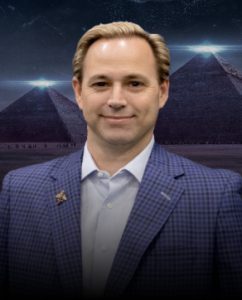
TOPIC: The Baghdad Battery
One of the world’s leading experts in ancient civilizations and their technologies, will be joining us at the CPAK 2023 conference. With over 20 years of research and study, Jason is a captivating speaker and an authoritative voice in the field of ancient history. From his in-depth knowledge of Sumerian and Babylonian history to his cutting-edge research into ancient technologies, Jason’s presentations are sure to inspire and enlighten. Don’t miss this opportunity to hear from Jason Martell, one of the most sought-after speakers in the ancient history community.
For over 15 years, Mr. Martell has been one of the leading researchers and lectures specializing in ancient civilization technologies. Mr Martell’s research has been featured worldwide on numerous television and radio networks such as History Channel, Discovery Channel, Syfy Channel, and the BBC.
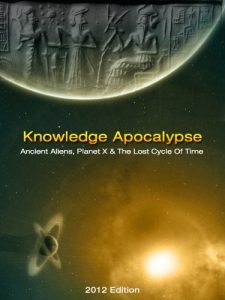
He has been featured in the show “Ancient Aliens” on the History Channel for over 10 years. He is an acclaimed researcher and lecturer in Ancient Civilization Technologies. His updated 2022 book “Knowledge Apocalypse” is available on Amazon.com.
Jason Martell is also Co-founder of numerous successful tech companies including Acorns.com & Godtube.com.
For over 20 years these two realms of business and personal passion have served as pillars of Mr. Martell’s career — and while they are parallel to each other, they do have one thing in common: a desire to uncover knowledge and foster progress for humankind.
Books by: Jason Martell
Presenting at CPAK 2023
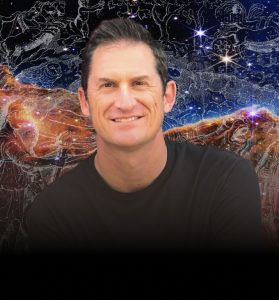
TOPIC: The Ancient World-Wide System: Stars, Myths and Recovering Your Self
For more than ten years, David Mathisen has been researching and deciphering the system of celestial metaphor that forms the foundation for the world’s ancient myths, scriptures, and sacred stories.
Abundant and compelling evidence shows that these ancient sacred traditions are in fact all related and closely connected, despite being found in virtually every longitude all the way around the globe, and stretching back to the very earliest texts and artwork known to us at this time.
The existence of this world-wide system argues for the existence of a sophisticated predecessor culture unknown to conventional history, standing alongside all of the archaeological evidence that has come to light over the centuries and continues to surface to this day.
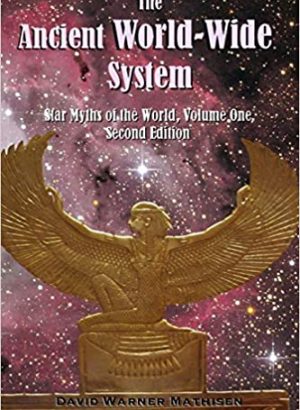
David is the author of The Ancient World-Wide System: Star Myths of the World Volume One (Second Edition), released in 2019, as well as of the earlier books Star Myths of the World Volume Two: Myths of Ancient Greece, Star Myths of the World Volume Three: Star Myths of the Bible, Star Myths of the World Volume Four: Norse Mythology, Astrotheology for Life, The Mathisen Corollary, The Undying Stars, and Ancient Myths, Ancient Wisdom.
He is a graduate of the US Military Academy at West Point and has a Masters in Literature from Texas A&M University. David served as an Infantry Officer in the 82nd Airborne and 4th Infantry Divisions and later as an instructor in the Department of English and Philosophy at West Point, where he had the opportunity to teach the Odyssey and to meet the late Professor Robert Fagles, author of superlative translations of the Iliad and the Odyssey.
David Warner Mathisen – CPAK 2019
Books by: David Warner Mathisen
Presenting at CPAK 2023
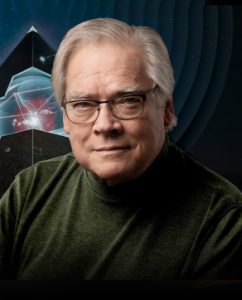
TOPIC: The Great Pyramid Gives Up More Secrets
Christopher Dunn was born in 1946 and has an extensive background as a craftsman, starting his career as an indentured apprentice in his hometown of Manchester, England. Recruited by an American aerospace company, he immigrated to the United States in 1969. For 52 years, Chris worked at every level of high-tech manufacturing from machinist, toolmaker, programmer, and operator of high-power industrial lasers, Project Engineer and Laser Operations Manager. For 17 year, he served as Human Resource Director for a Midwest aerospace manufacturer.
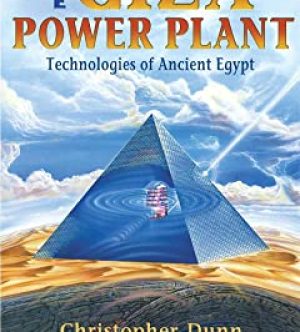
Chris’s pyramid odyssey began in 1977 after he read Peter Tompkins’ book Secrets of the Great Pyramid. His immediate reaction after learning of the Great Pyramid’s precision and design characteristics was to consider that this edifice may have had an original purpose that differed from conventional opinion. After further research and study of source material on various theories, Chris concluded that it must have originally been built to provide a highly technical society with energy—in short, it was a very large machine. Discovering the purpose of this machine and documenting his case took the better part of twenty years of research and resulted in the 1998 publication of Chris’s book, The Giza Power Plant: Technologies of Ancient Egypt, which describes a holistic energy device that is harmonically coupled with the Earth and its inhabitants.
Chris has published over a dozen magazine articles, including the much quoted “Advanced Machining in Ancient Egypt” in Analog, August 1984, and has had his research referenced in over a dozen books on Egypt. In the United States, he has appeared on PAX Television, the History Channel, Travel Channel, Discovery Channel, The Learning Channel, and Lifetime Television discussing his research.
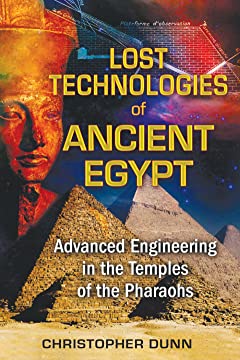
Chris’s second book, Lost Technologies of Ancient Egypt, was published by Inner Traditions/Bear & Company in the Spring of 2010. In this work, Chris focuses on an important aspect of his research into the manufacturing capabilities of the ancient Egyptians and through his engineer’s eye and camera, reveals to his readers previously overlooked magisterial characteristics of Egyptian architectural and manufacturing wizardry.
Chris Dunn – CPAK 2019
Books by: Chris Dunn
Presenting at CPAK 2023
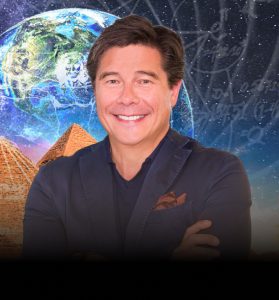
TOPIC: One is the Only Constant
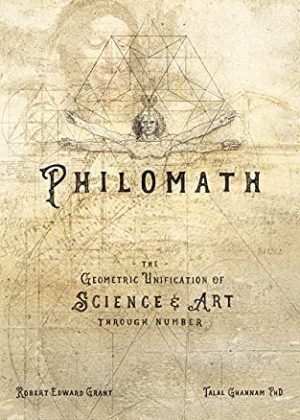
The Fundamental Discovery that all Mathematical and Physical Constants (including Pi, Euler, Phi, Alpha, etc) are mirrored reflections of each other using octonion symmetry mathematics with basic transformations related to the number ONE (separating from and back into singularity).
Robert Edward Grant is a genius inventor with an eye for patterns hidden within the fabrics of reality. Similar to how the Great Year appears as nuanced astronomical motions until examined from an alternative perspective in context, Robert has discovered prime number polyhedrons laced within all sound frequencies, but within music more notably. The characteristics of sonic geometry can be dated back to most, if not all ancient cultures who appear to have utilized specialized patterns for sound rhythms to create what we now know as music. Mathematics is a primordial language utilized by ancient cultures (aside from pictograms) that was derived out of a necessity to communicate and count. Yet, so much surrounding mathematics is not yet fully understood. Prime numbers especially have been tabled for a later debate—default outliers due to their seeming lack of interconnectivity—until now.
Robert’s research has correlated absolute prime number values appearing in specific, identical patterns of data sets—even within those sets that are randomly generated number sequences. Further, this pattern can be translated into a kind of “musical geometry” that reveals secret shapes known as “polyhedrons” within the sound itself.
By taking the corresponding individual musical notes inside the chromatic scale of octaves, Robert was able to convert them using the Pythagorean theorem to generate “degree reference points” within a specific range on the hertz frequency scale of sound. His research has appeared on Gaia and Ancient Origins and can be found on his own website as well.
Robert holds a Bachelor of Arts degree from Brigham Young University, and an MBA (cum laude) from Thunderbird, The American Graduate School of International Management.
Robert Edward Grant – CPAK 2023
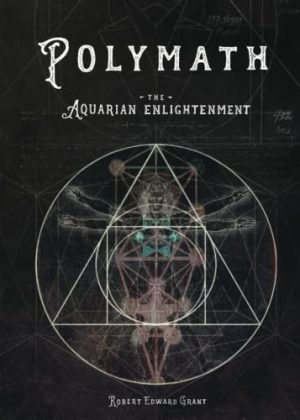
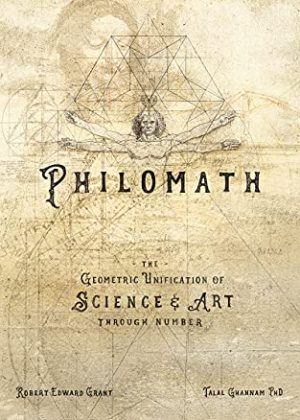
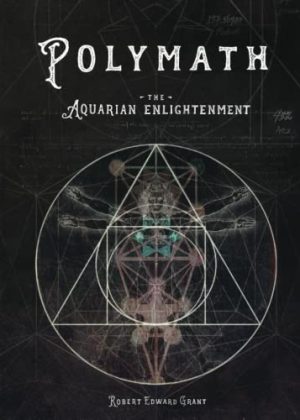
Books by: Robert Edward Grant
Presenting at CPAK 2023
TOPIC: How the Earth’s Motion Shapes History
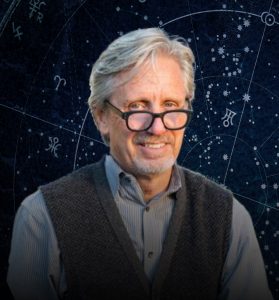
The light from our closest star, the Sun, has amazing life-giving and therapeutic effects. When separated from natural light for too long, plants whither and die, animals get sick, and humans grow ill or sad, literally. Seasonal Effective Disorder, SAD, is a disease that affects people that live in extreme latitudes, deprived of light for months on end.
But the waxing and waning light from our nearest star have far more profound effects than just our level of happiness or disease. Stellar light actually affects the course of history. To comprehend the magnitude of change we first need to understand the earth’s basic celestial motions.
In the dark ages, people saw the sun and stars rise in the east and set in the west and wrongly assumed the sun and stars moved around us. Copernicus showed us the earth actually rotates on its axis in the opposite direction, making it appear that celestial objects rise in the east and set in the west. He defined the first motion of the earth as “rotation”, a simple motion with profound effects.
As the earth’s axis rotates we experience alternating periods of light and darkness, more or less depending on our latitude and the season. Because most creatures have adapted their waking and sleeping patterns to this diurnal motion they wake and become conscious with the expanding light, only to drift back into a subconscious “sleep state” when that light is removed for any extended period of time. In other words, the light from our nearest star literally changes our consciousness every day! It is an amazing phenomenon but it happens so often, we don’t think it is extraordinary. Billions of creatures undergo a daily metamorphosis tied to this first celestial motion.
The earth’s second motion is its orbit around the sun. Copernicus called this “revolution” and explained that this is why we see a different constellation overhead each month. As the earth “revolved” around the sun we see a different section of the sky. Because it does so on a slight tilt, it produces the seasons of the year, changing the behaviors of trillions of plants and animals even more profoundly than the earth’s first motion. The waxing light of spring causes countless species to sprout from the ground, bloom, and fruit in endless colors and varieties, and then with the waning light of autumn, fall or decay into nothingness again. But it’s not just plants, billions of animals awaken from hibernation with the expanding light of spring, while trillions of others will spawn, procreate, or migrate in patterns all over the globe. Like a Disney movie, the maestro of light conducts its orchestra of lifeforms, causing them to dance and sing in infinite variety! Technically, it is the electromagnetic waves of our closest star, the sun, that cause all the change. Whether it is visible light, ultraviolet, infrared, x-rays, or gamma rays, this vast spectrum of light emanating from our nearest star has unimaginable power!
The earth’s third motion, the precession of the equinox, is not widely understood. But over a dozen ancient cultures said it was the most transformative celestial motion of all. We observe this motion as the sun on the equinox, moving through all the constellations of the zodiac at the rate of about 50 arc seconds per year, or one degree every 72 years or so, meaning it takes about 25,700 years to complete its circuit, at the present rate. But the rate is speeding up, so many predict the sun will actually travel through all 12 constellations of the zodiac in about 24,000 years.
The average person is unaware of this third motion but Copernicus had to explain it since he had just determined the sun was the center of our Universe “and cannot move”. He needed to explain away what he thought was the sun’s “apparent motion” just as he explained away the apparent motion of the sun and stars going around us every day and year. So he said the earth’s axis must “librate” or wobble, making it just “appear” that the sun moves relative to the background star. This was a good theory for the time and Newton and others, in subsequent years, tried to explain exactly how and why the earth wobbles but their equations never quite worked. In fact, they have expanded from just a few inputs (initially just the Moon and Sun) to thousands of inputs and almost no one understands the equation anymore. Even the International Astronomical Union (IAU) noted that the equations “are not dynamically accurate”. Recently some scientists have suggested that the effects of the earth’s wobble are greatly over-stated and that the sun (and most other stars) actually do have some movement!
Ancient cultures believed that just as the moon takes the earth for a partner and revolves around it, and just as the earth (with the moon) takes the sun for its partner and revolves around it, so too did the sun (with all its planets) take another star for its partner and revolve around it. So the ancient theory of the earth’s third motion is very different than that of Copernicus who explained it away as if the sun had no movement. Most importantly, the ancient explanation provides a mechanism for waxing and waning light very similar to the earth’s first two motions, meaning there may be a very logical reason why the earth’s third motion might produce changes every bit as profound as the earth’s first two motions.
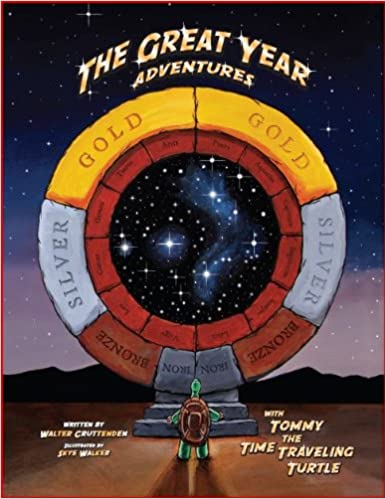
Plato called precession the “Great Year”. He and the Greco-Roman Mithraic culture implied that as the sun moved through different zodiacal changes the world went through incredible changes. Hesiod, the famous Greek historian, suggested it produced the different “ages” of man, which the Greeks dubbed the Iron (age of man), Bronze (age of the hero), Silver (age of the demigods), and Golden age (age of the gods), akin to the seasons of the calendar year. But long before the Greeks, the Vedic scholars and Rishi’s of ancient India, also recognized this celestial motion, calling it the Yuga cycle. They too broke it into four periods: Kali, the darkest age, Dwapara, the electrical age, Treta, the age of the mind and telepathy, and Satya, the equivalent of the Golden Age, where supposedly mankind lives in tune with the heavens. This is a time, according to Hesiod when mankind lives in “peace and plenty” and “the earth gives of itself freely”.
The Indian Astronomer, Sri Yukteswar, in his book, The Holy Science, tells us the Great Year, or Yuga cycle, produces a complete change in both the “inner and outer worlds”, every 12,000 years, as the sun carries the earth from the depths of the Dark Ages, to the peak of the Golden Age, and back again. He explains the cause of this motion as our solar system moving around another star. He points out that when we are closest to this other star, the earth experiences a Golden age, which last happened about 11,500 BC, and when we are farthest from that star, the earth experiences a Dark age, which last occurred about 500AD. Obviously, there have been a lot of changes since either of these dates but most have been forgotten! We do recognize the Dark Age, after the fall of Greece, Rome, Egypt, Summer, Akkad, Babylon, and every other pre-Dark Age civilization. And we recognize there has been a “renaissance” about a thousand years since the pit of the last Dark Age. Coincidentally or not, about a thousand years since the sun left its farthest point from this other star. But modern scholars are largely unaware of the Great Year and do not acknowledge any long-lost Golden Age, or any mechanism to bring waxing and waning light to the earth, associated with the precession cycle.
Not recognizing any life-changing force associated with the earth’s third motion, modern scholars hold that the only thing that drives long-term history is “evolution”. Looking strictly through this modern scientific lens anything that came before us must be more primitive. And if something is found that does not quite fit the narrative it can be explained away as an anomalous artifact. This bias shapes our view of history and we try to put everything into the Darwinian paradigm without even considering there may be other factors at work. This myopic view allows us to ignore or forget that virtually every civilization prior to the last dark age was in a much higher state before its decline…
Walter Cruttenden – CPAK 2019
Presented at CPAK 2019

TOPIC: Competing with Caltech: Is it a Planet or a Star?
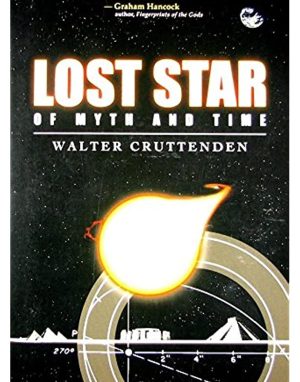
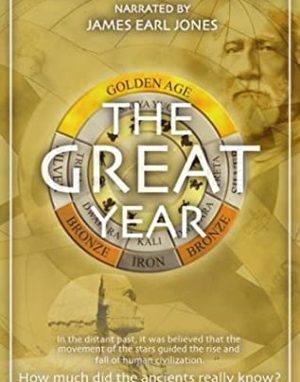
Walter is the Director of the Binary Research Institute in Newport Beach, California, and the author of the best selling book, Lost Star of Myth and Time. He is also the writer and producer of the award-winning documentary film, “The Great Year”.
BRI’s main focus is on understanding the cause and consequences of solar system motion, particularly the phenomenon of the precession of the equinox. Walter’s work at the institute indicates that the mechanics of the well-known celestial motion have been misdiagnosed and are actually the result of our own solar system’s motion, and that this “motion” has profound affects on life, akin to the changing seasons. This discovery lends its validation to the world-wide ancient myth and folklore that our consciousness actually moves in a vast cycle of time, with alternating Dark and Golden ages.
Website:
Books by Walter Cruttenden
Presented at CPAK 2019
TOPIC: The Great Pyramid Gives Up More Secrets
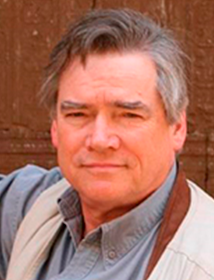
Christopher Dunn was born in 1946 and has an extensive background as a craftsman, starting his career as an indentured apprentice in his hometown of Manchester, England. Recruited by an American aerospace company, he immigrated to the United States in 1969. For 52 years, Chris worked at every level of high-tech manufacturing from machinist, toolmaker, programmer, and operator of high-power industrial lasers, Project Engineer and Laser Operations Manager. For 17 year, he served as Human Resource Director for a Midwest aerospace manufacturer.
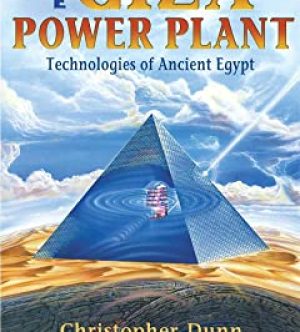
Chris’s pyramid odyssey began in 1977 after he read Peter Tompkins’ book Secrets of the Great Pyramid. His immediate reaction after learning of the Great Pyramid’s precision and design characteristics was to consider that this edifice may have had an original purpose that differed from conventional opinion. After further research and study of source material on various theories, Chris concluded that it must have originally been built to provide a highly technical society with energy—in short, it was a very large machine. Discovering the purpose of this machine and documenting his case took the better part of twenty years of research and resulted in the 1998 publication of Chris’s book, The Giza Power Plant: Technologies of Ancient Egypt, which describes a holistic energy device that is harmonically coupled with the Earth and its inhabitants.
Chris has published over a dozen magazine articles, including the much quoted “Advanced Machining in Ancient Egypt” in Analog, August 1984, and has had his research referenced in over a dozen books on Egypt. In the United States, he has appeared on PAX Television, the History Channel, Travel Channel, Discovery Channel, The Learning Channel, and Lifetime Television discussing his research.
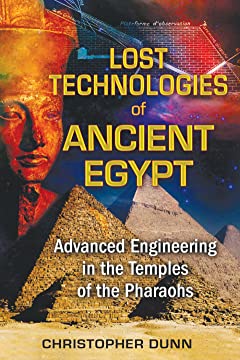
Chris’s second book, Lost Technologies of Ancient Egypt, was published by Inner Traditions/Bear & Company in the Spring of 2010. In this work, Chris focuses on an important aspect of his research into the manufacturing capabilities of the ancient Egyptians and through his engineer’s eye and camera, reveals to his readers previously overlooked magisterial characteristics of Egyptian architectural and manufacturing wizardry.
Books by Chris Dunn
Presented at CPAK 2019

TOPIC: The Genesis of Cosmology: A Legacy of the Denisovans?
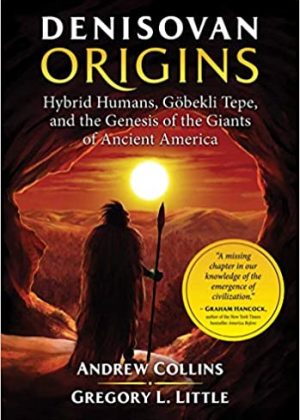
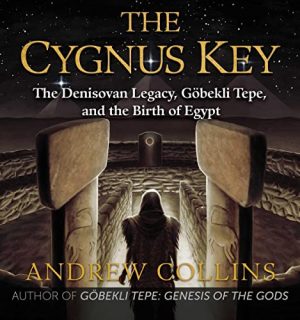
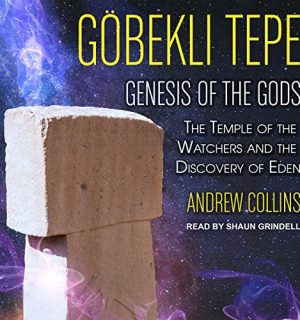
Andrew Collins is a science and history writer, as well as the author of over a dozen books including Times bestseller From the Ashes of Angels (1996), Göbekli Tepe: Genesis of the Gods (2014), The Cygnus Key: The Denisovan Legacy, Göbekli Tepe and the Birth of Egypt (2018), and Denisovan Origins: Hybrid Humans, Göbekli Tepe and the Genesis of the Giants of Ancient America (2019), co-authored with Greg L. Little. He lives in the UK. His website is www.andrewcollins.com
Who built Göbekli Tepe, and when and why was it constructed? Andrew Collins – author of the seminal work Göbekli Tepe: Genesis of the Gods – conjures a picture of the genesis of Göbekli Tepe in 9600 BCE, explaining its suspected function as a shamanic point of access to a sky world built in response to the terrifying events of the Younger Dryas comet impact event. Yet who built Göbekli Tepe will be a much longer road to travel – one that begins much farther east in what is today Siberia and Mongolia at the time of humanity’s first encounters with the mysterious form of archaic human known today as the Denisovans. Andrew introduces the extraordinarily advanced world of the Denisovans, which included beautiful jewellery, tailored clothing, musical instruments, suspected horse domestication, and, most crucially, the development of a unique stone tool technology that emerges for the first time around 45,000 years ago and will come to define the Upper Paleolithic tool kit right down the age of Göbekli Tepe. Beyond this, Andrew speculates on the unique and possibly autistic mindset of the Denisovans, and demonstrates how they might well have been responsible for humanity’s obsession with cyclic time and a universal death journey involving the stars of Orion, the Pleiades and the Cygnus constellation.
Website:
Books by Andrew Collins
Presented at CPAK 2019

TOPIC: Re-Writing Human Physiology with Dental Anthropology & Quantum Biology
Teeth provide the foundations of human history with tree-ring like record of our ancestor’s lives. Anthropological studies show that modern humans have experienced a dramatic change in the growth of the dental arch in modern times due to diet and functional habit. Dr. Lin merges ancient dental records with breakthrough principles of quantum biology to re-define the borders of what we understand about the human body. In this talk, he will explore how human biology is written in our teeth links with cosmic cycles, and the clues that the human body may reveal about a binary-star system.
Dr. Steven Lin is a dentist, speaker, and internationally published author. He is a world leader in functional dentistry with his focus on crooked teeth as a preventable and nutritional problem.
Dr. Lin merges anthropological and biomedical sciences to provide a multi-disciplinary perspective on a range of issues. He is a featured expert on The Human Origin Project, a global platform advancing the understanding of humanity’s true story.
Presented at CPAK 2019
TOPIC: The Ancient World-Wide System: Stars, Myths and Recovering Your Self
For more than ten years, David Mathisen has been researching and deciphering the system of celestial metaphor that forms the foundation for the world’s ancient myths, scriptures, and sacred stories.
Abundant and compelling evidence shows that these ancient sacred traditions are in fact all related and closely connected, despite being found in virtually every longitude all the way around the globe, and stretching back to the very earliest texts and artwork known to us at this time.
The existence of this world-wide system argues for the existence of a sophisticated predecessor culture unknown to conventional history, standing alongside all of the archaeological evidence that has come to light over the centuries and continues to surface to this day.
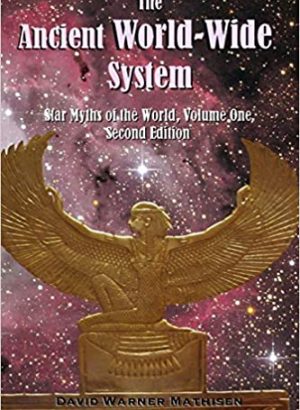
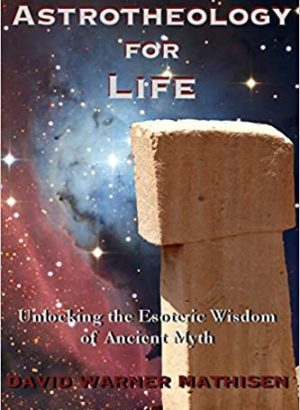
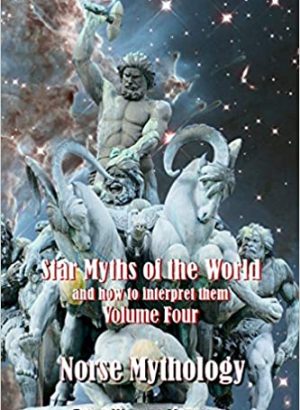
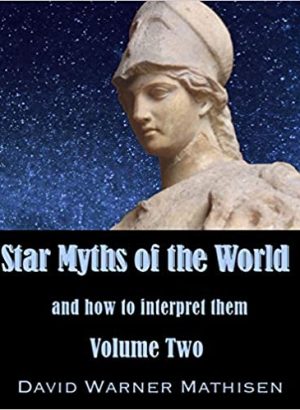
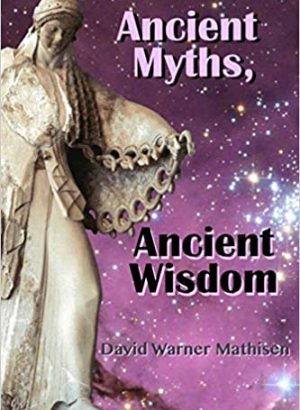
David is the author of The Ancient World-Wide System: Star Myths of the World Volume One (Second Edition), released in 2019, as well as of the earlier books Star Myths of the World Volume Two: Myths of Ancient Greece, Star Myths of the World Volume Three: Star Myths of the Bible, Star Myths of the World Volume Four: Norse Mythology, Astrotheology for Life, The Mathisen Corollary, The Undying Stars, and Ancient Myths, Ancient Wisdom.
He is a graduate of the US Military Academy at West Point and has a Masters in Literature from Texas A&M University. David served as an Infantry Officer in the 82nd Airborne and 4th Infantry Divisions and later as an instructor in the Department of English and Philosophy at West Point, where he had the opportunity to teach the Odyssey and to meet the late Professor Robert Fagles, author of superlative translations of the Iliad and the Odyssey.
Website:
Books by David Warner Mathisen
Presented at CPAK 2019
TOPIC: The Esoteric Wisdom & Sacred Science of the Ancient Maya Mystery Schools
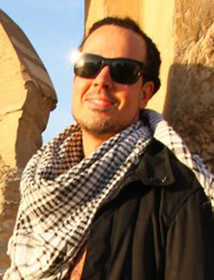
Anyextee is an esoteric researcher, world traveler, author and filmmaker called to investigate the ancient mysteries, metaphysics and mysticism. He transformed his passion for exploration into an esoteric tour company dedicated to providing travelers with more meaningful experiences offering symbolist tours through Egypt, Turkey and Mexico.
As the producer and narrator for “The Sacred History of the Rosicrucians”, Anyextee explores the heritage and importance of the mystical order’s traditional timeline. He is also producer and narrator for the Rosicrucian Egyptian Museum Educational Guide and founder of AdeptInitiates.com, AdeptExpeditions.com and AncientEgyptMysterySchools.com. Anyextee has also been featured on the Travel Channel.
Research featured in his debut book, tentatively titled, “Water Wizards: The Lost Music of the Maya, Cymatics and the Kukulkan Degree of Consciousness”, available summer of 2020 at www.Anyextee.com, examines the esoteric wisdom and sacred science of the ancient Maya and their cosmic universities.
Presented at CPAK 2019

TOPIC: Sacred Cosmology of Ancient Egypt: An Interactive Virtual Tour
A professor at the University of Calgary in Canada, Dr. Carmen Boulter is the creative fire behind The Pyramid Code, directing, producing, and writing the series. She has been researching and writing about the sacred feminine in ancient Egypt and in goddesses world-wide for two decades. Her book, Angels and Archetypes: An Evolutionary Map of Feminine Consciousness, traces fragments of information about matriarchal cultures in pre-dynastic Egypt, prehistoric Greece, and around the world. In the archives of the Egyptian Museum, she gained official access to the original field notes of excavations done around the pyramids in the early 1900s. Dr. Boulter has an unshakable passion for Egypt and has traveled there 34 times.Website:
Presented at CPAK 2019

TOPIC: Dwapara Science
Emerging New Theories Could Explain Yukteswar’s Prediction
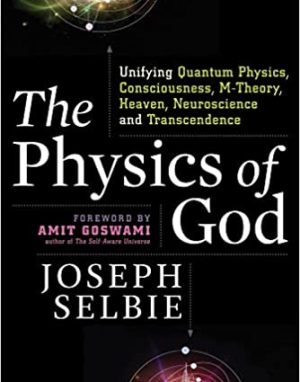
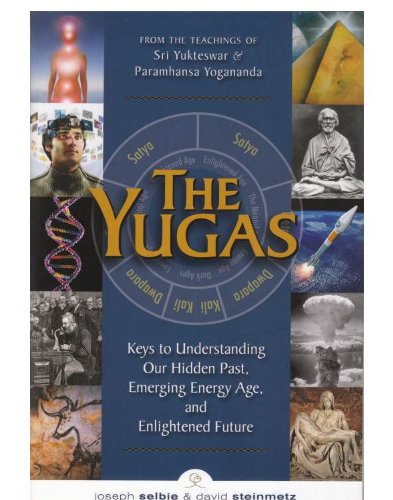
Joseph Selbie is the author of The Physics of God. An avid follower of the unfolding new paradigms of science, he is known for creating bridges of understanding between the modern evidenced-based discoveries of science and the ancient experience-based discoveries of the mystics. Joseph is also the co-author of The Yugas, a factual look at Yukteswar’s description of the cycle of the ages.
A dedicated Kriya meditator for nearly 50 years, he has taught yoga and meditation throughout the US and Europe, helping people to understand and find their own spiritual potential—and helping them understand how the expression of their spiritual potential ushers into the world an unstoppable wave of peaceful consciousness. He is a founding member of Ananda, a world-wide spiritual movement. Joseph has been with Ananda since 1975 and has served in a wide variety of roles including IT Director, Ananda Village Community Manager, Lightbearer, and spearhead for Ananda’s work in Europe and Seattle. Joseph is the author of other books exploring how spirituality connects with culture and science, including a sci/fi fantasy series, The Protectors Diaries, inspired by the abilities of mystics. He is currently working on a new book, The Psychology of God, an exploration of the intersections of psychology and neuroscience with higher consciousness.
Website:
Books by Joseph Selbie
Presented at CPAK 2019
TOPIC: A Midsummer Night’s Lucid Dream
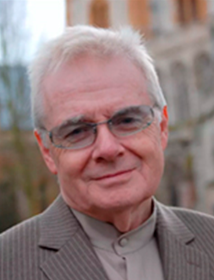
Following up on his hit presentation from CPAK 2016 in which he revealed Shakespeare’s Sonnets contain deeply encoded connections to the Great Pyramid, Alan Green now brings us the true meaning behind A Midsummer Night’s Dream. The play within the play (Pyramus and Thisbe) at the end of this classic perennial favorite of kids and grown-ups alike has never been fully explained… until now. “What fools these mortals be!”
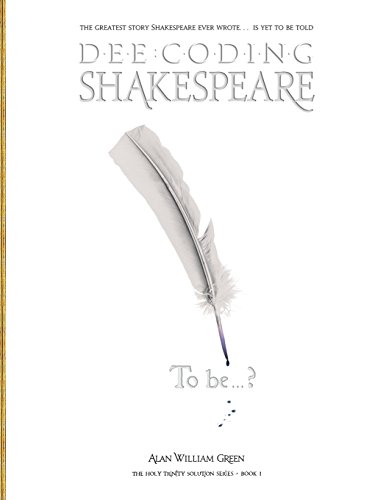
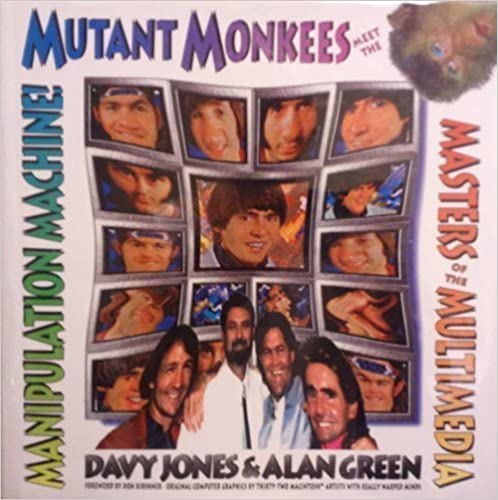
Alan Green was born in the UK, trained classically as a pianist in his early years, and later became a singer/songwriter signed to Arista and CBS. He was the musical director for Davy Jones of The Monkees for over a decade, and his bestselling books, They Made a Monkee Out of Me and Mutant Monkees, both won literary awards. Research featured in his current book, Dee-Coding Shakespeare, identifies numerical synchronicities surrounding the number 624. His follow-up book, BardCode, available later this year, examines mathematical codes found in Shakespeare’s Sonnets and shows that the Bard was secretly pointing us to as yet undiscovered physical attributes of the Great Pyramid. His analysis shows the architecture reveals a Universal Constant of Measure, previously known only to ancient cultures. Alan’s interpretation of these alchemical elements fundamentally redefines humanity’s long-held interpretation of reality.
Website:
Books by Alan Green
Presented at CPAK 2019

TOPIC: Talk topic
Lorem ipsum dolor sit amet, consectetur adipiscing elit, sed do eiusmod tempor incididunt ut labore et dolore magna aliqua. Ut enim ad minim veniam, quis nostrud exercitation ullamco laboris nisi ut aliquip ex ea commodo consequat. Duis aute irure dolor in reprehenderit in voluptate velit esse cillum dolore eu fugiat nulla pariatur. Excepteur sint occaecat cupidatat non proident, sunt in culpa qui officia deserunt mollit anim id est laborum.Author Credentials/Links/Etc/…:
Lorem ipsum dolor sit amet, consectetur adipiscing elit. Ut elit tellus, luctus nec ullamcorper mattis, pulvinar dapibus leo.
Books by: SPEAKER’S NAME
Presented at CPAK 2019
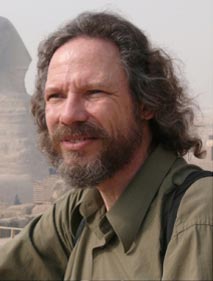
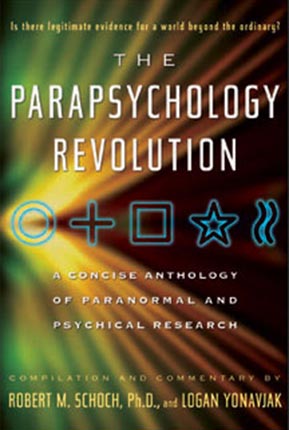
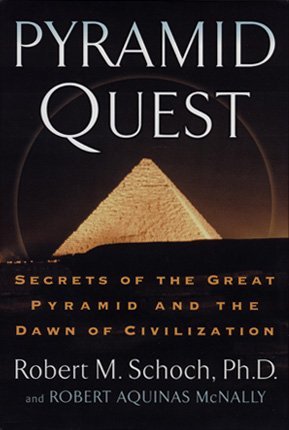
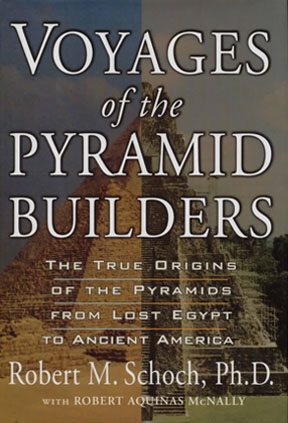
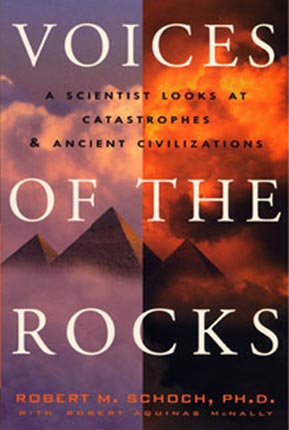
Dr. Robert Schoch of Boston University is speaking on Göbekli Tepe, the incredibly sophisticated 12,000-year-old archaeological complex in southeastern Turkey.
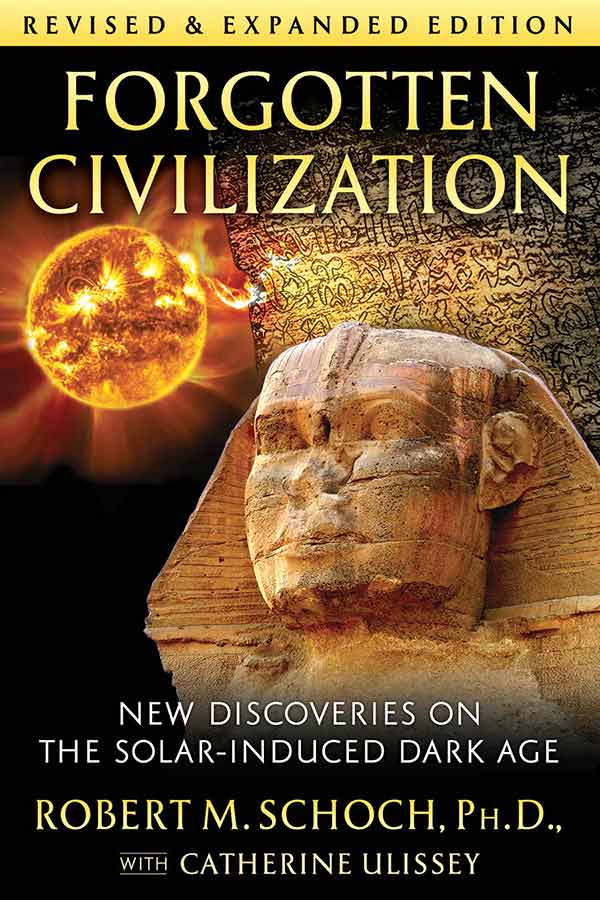
Professor, geologist, author, and scientist famed for re-dating the Great Sphinx, Dr. Schoch will discuss the enigma of Göbekli Tepe, which belongs to an early cycle of civilization dating back to the end of the last ice age. Dr. Schoch’s latest research, put forth in his book Forgotten Civilization: The Role of Solar Outbursts in Our Past and Future, points to the astronomical cause of the demise of antediluvian civilizations, as well as the scientific and archaeological evidence that supports his conclusions.
Website
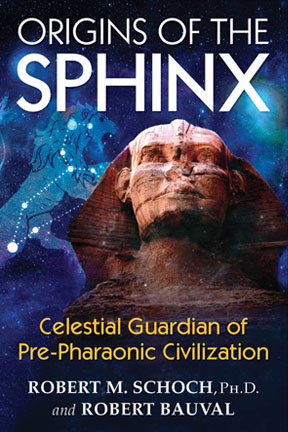
Books by Robert Schoch
Presented at CPAK 2019
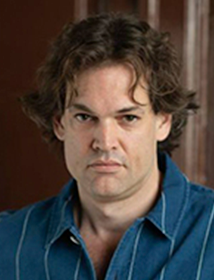
Alistair is a dedicated researcher and interpreter of Paleolithic art. Although he is characterized as being an enigma, it is his discoveries that have garnered attention. Drawn to the artistic legacies of our ancestors, Alistair took his interests to the School of Oriental and African Studies at the University of London, where he focused on religion and archaeology. Those studies revealed an ancient world with its records kept hidden in the images left upon cave walls at ancestral sites across the globe.
Regarding the Paleolithic art at Göbekli Tepe, Alistair co-authored a publication with Dr. Martin Sweatman at the University of Edinburgh, analyzing the cryptic stone arranged in a curious manner. Similar to the structure of Stonehenge in England, Göbekli Tepe, which is located in Turkey, is two hundred megalithic pillars arranged in twenty circles; the site is surrounded by dust and clay. The age of Göbekli Tepe dates back to no earlier than the 8th millennia B.C.E., making it the oldest known surviving megalithic structure.
Alistair’s analysis of the site includes a logistical interpretation of what he describes as being the world’s first “pictogram.” The site itself is laced with symbolism and correlative coincidences to the common astrological anchors of the zodiac, all of which seem to align in ways that appear to be beyond coincidental. Alistair’s investigation into the site and the purpose it had includes ancient cultures and their ceremonial rituals.
Original Journal Submission here:
https://arxiv.org/abs/1806.00046
Submitted on 31 May 2018 Martin B. Sweatman, Alistair Coombs
Presented at CPAK 2019

TOPIC: One is the Only Constant
The Fundamental Discovery that all Mathematical and Physical Constants (including Pi, Euler, Phi, Alpha, etc) are mirrored reflections of each other using octonion symmetry mathematics with basic transformations related to the number ONE (separating from and back into singularity).
Robert Edward Grant is a genius inventor with an eye for patterns hidden within the fabrics of reality. Similar to how the Great Year appears as nuanced astronomical motions until examined from an alternative perspective in context, Robert has discovered prime number polyhedrons laced within all sound frequencies, but within music more notably. The characteristics of sonic geometry can be dated back to most, if not all ancient cultures who appear to have utilized specialized patterns for sound rhythms to create what we now know as music. Mathematics is a primordial language utilized by ancient cultures (aside from pictograms) that was derived out of a necessity to communicate and count. Yet, so much surrounding mathematics is not yet fully understood. Prime numbers especially have been tabled for a later debate—default outliers due to their seeming lack of interconnectivity—until now.
Robert’s research has correlated absolute prime number values appearing in specific, identical patterns of data sets—even within those sets that are randomly generated number sequences. Further, this pattern can be translated into a kind of “musical geometry” that reveals secret shapes known as “polyhedrons” within the sound itself.
By taking the corresponding individual musical notes inside the chromatic scale of octaves, Robert was able to convert them using the Pythagorean theorem to generate “degree reference points” within a specific range on the hertz frequency scale of sound. His research has appeared on Gaia and Ancient Origins and can be found on his own website as well.
Robert holds a Bachelor of Arts degree from Brigham Young University, and an MBA (cum laude) from Thunderbird, The American Graduate School of International Management.
Website:
www.robertedwardgrant.com
Books by Robert Edward Grant